
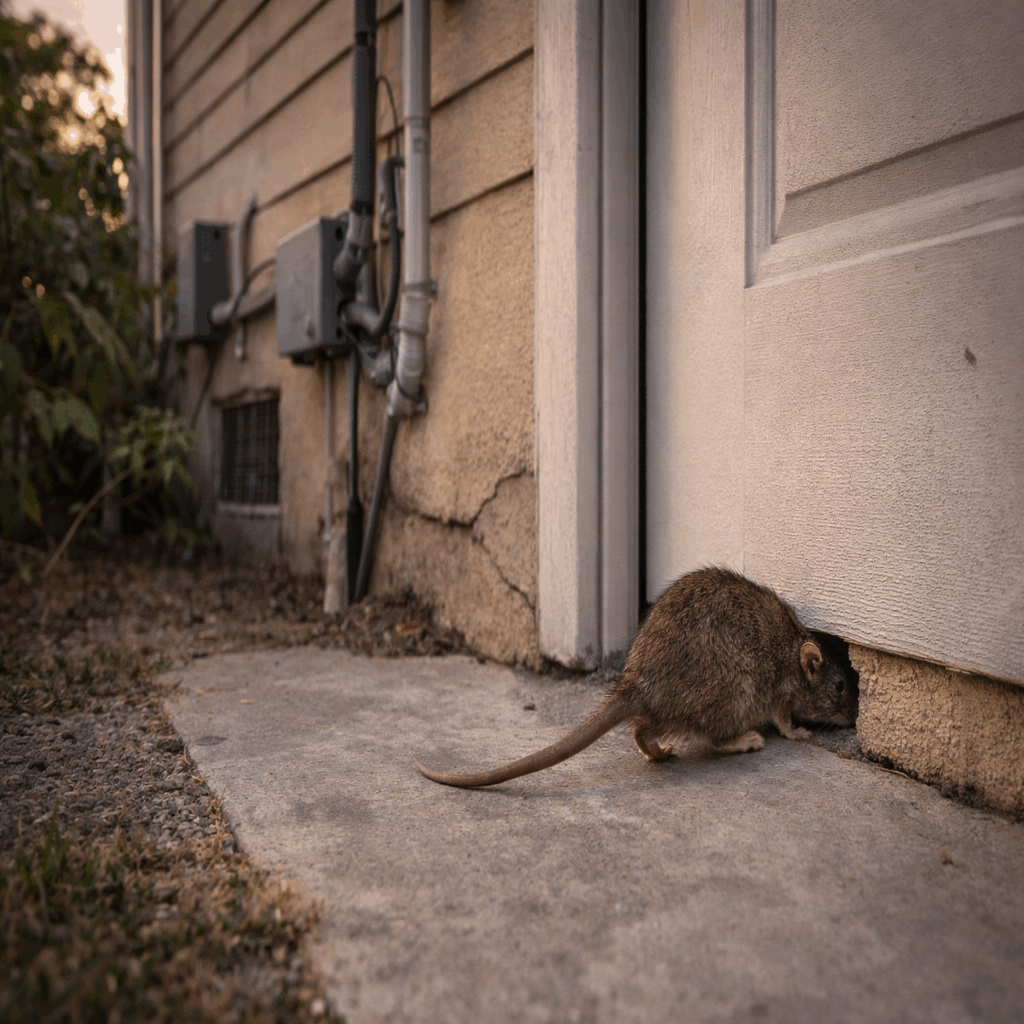
Rats and mice don’t need a wide-open door to get inside — just a small gap is enough.
A mouse can squeeze through a hole the size of a dime, and a rat only needs a quarter-sized opening.
In San Diego’s warm climate, rodents stay active year-round, constantly looking for shelter, food, and warmth inside homes. Once inside, they can chew wiring, contaminate food, and reproduce quickly.
Time and again, we find the same overlooked access points letting rodents sneak in. Here are the 8 most common hidden rodent entry points — and how to seal them before they cause trouble.
1. Roof Vents and Eaves
Why it matters:
Roof rats (common in San Diego) are expert climbers. They scale trees, utility lines, and fences to access attics through open or damaged vents.
How to fix it:
✅ Install ¼-inch galvanized hardware cloth over attic and gable vents.
✅ Seal gaps under roof eaves with metal flashing or weatherproof caulk.
✅ Trim back palm fronds and branches at least 3 feet from the roofline.
Pro Tip: Use a flashlight at night — if you see light escaping through your attic vents, rodents can enter too.
2. Gaps Around Doors and Garage Weatherstripping
Why it matters:
Even a ½-inch gap under an exterior door or garage panel is an open invitation for mice and rats.
How to fix it:
✅ Replace worn-out door sweeps and garage seals.
✅ Use metal thresholds on frequently used doors.
✅ Check side and bottom seals on garage doors annually.
Pro Tip: If daylight or cool air leaks in under your door, rodents can fit through.
3. Utility Line and Pipe Openings
Why it matters:
Rodents follow plumbing, electrical, and HVAC lines directly into walls, crawl spaces, and attics.
How to fix it:
✅ Seal around pipes and conduits with steel wool and expanding foam (rodents can’t chew through metal).
✅ For larger openings, use cement or copper mesh.
✅ Inspect behind appliances where plumbing enters walls.
Pro Tip: Pay special attention to the kitchen, laundry room, and bathrooms — areas with multiple pipe penetrations.
4. Foundation Cracks and Crawl Space Vents
Why it matters:
Norway rats are ground dwellers that burrow along foundations and slip through cracks or open vents.
How to fix it:
✅ Fill foundation cracks with mortar or metal mesh.
✅ Cover crawl space vents with heavy-duty hardware cloth.
✅ Maintain at least 6 inches of clearance between soil and vent openings.
Pro Tip: Look for dirt smudges or greasy rub marks — rodents leave “grease trails” from frequent use.
5. Rooflines and Soffit Gaps
Why it matters:
Where your roof meets exterior walls, small gaps often develop as materials expand, contract, or age. Roof rats exploit these spaces to enter attics.
How to fix it:
✅ Inspect soffits for cracks or rotted wood.
✅ Seal joints with weatherproof sealant or metal flashing.
✅ Schedule regular roof inspections to catch gaps early.
Pro Tip: Check for droppings or nesting debris near insulation around soffit vents — it’s a common sign of attic intrusion.
6. Attic Access Panels and Exhaust Vents
Why it matters:
Bathroom and kitchen vents lead directly outside — and without screens, they become expressways for rodents.
How to fix it:
✅ Install fine-mesh screens over vent openings.
✅ Inspect vent covers and flaps twice a year for damage.
✅ Use backdraft dampers to block entry when vents aren’t in use.
Pro Tip: Listen for faint scratching near ceiling fans or ducts — rodents love to travel through ventilation systems.
7. Siding Gaps and Weep Holes
Why it matters:
Many stucco or siding structures in San Diego have weep holes — small openings that allow moisture to escape. Unfortunately, rodents can enter through them if they widen.
How to fix it:
✅ Insert stainless steel weep hole covers that allow ventilation but block pests.
✅ Seal gaps between siding panels and foundations with weatherproof caulk.
Pro Tip: If you notice droppings near baseboards or behind outdoor cabinets, inspect the siding directly above for gaps.
8. Air Conditioner and HVAC Access Points
Why it matters:
Rodents often enter through A/C line chases, wall gaps around condensers, or ductwork openings. Once inside, they can destroy insulation and wiring.
How to fix it:
✅ Seal around refrigerant and drain lines with metal mesh or caulk.
✅ Inspect attic ductwork for chew marks or droppings.
✅ Use vent screens to keep pests out of exterior units.
Pro Tip: A sudden drop in A/C efficiency could indicate rodent damage to ductwork.
How to Check for Rodent Entry Points
- Walk your home’s entire perimeter at night with a flashlight.
- Look for rub marks, gnaw marks, droppings, or chewed insulation.
- Pay close attention to attics, garages, and crawl spaces.
- Remember: if you find one entry point, there are usually more.
Professional Rodent Exclusion in San Diego
Sealing rodent entry points takes more than caulk — it requires experience, tools, and a full understanding of how rodents behave.
At Talos Pest Control, our exclusion experts use a proven, multi-step process to keep rodents out for good:
- Comprehensive inspection to locate all current and potential entry points.
- Professional sealing and hardware installation using chew-proof materials.
- Eco-friendly treatment options to eliminate existing rodents safely.
- Preventive maintenance for long-term protection.