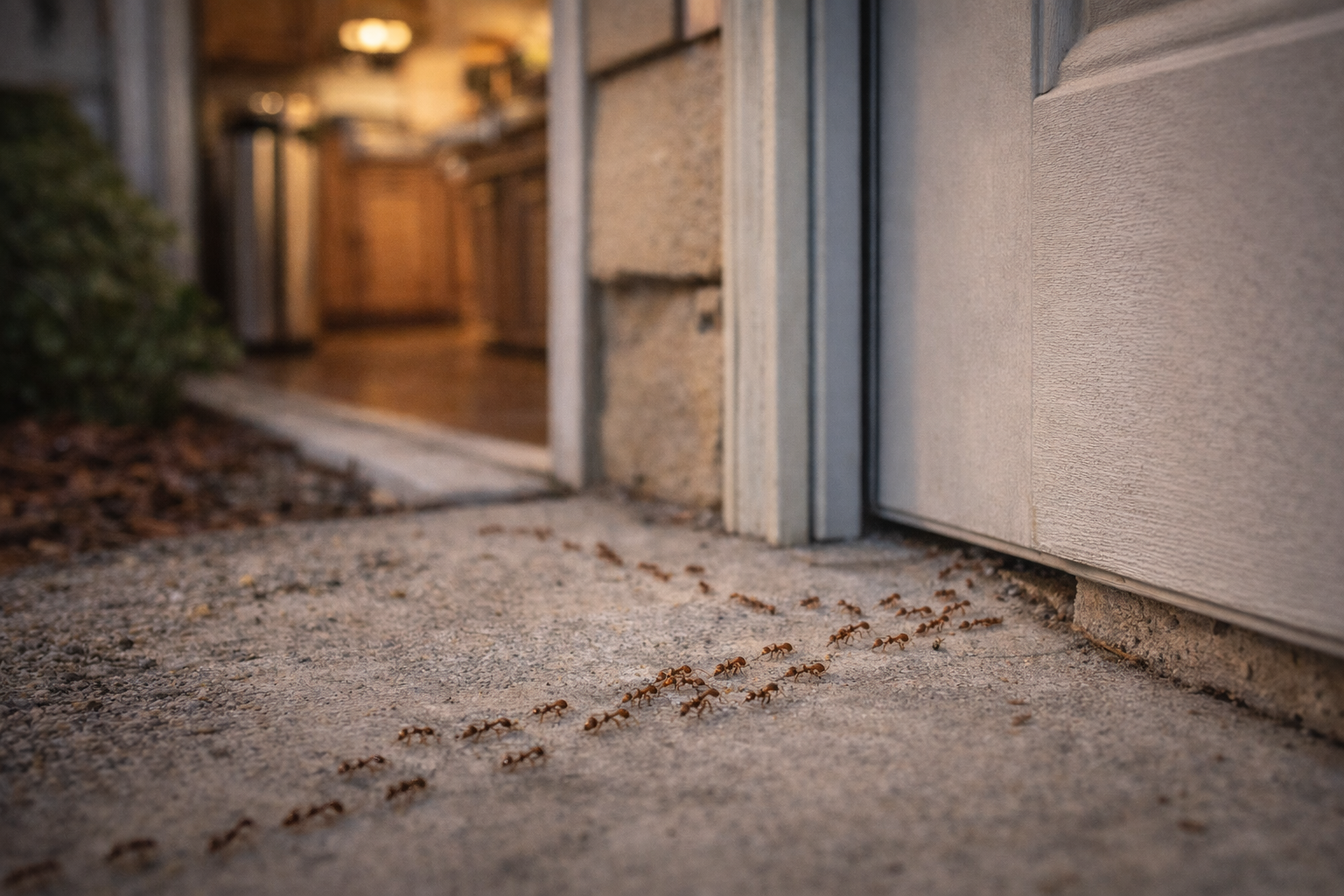

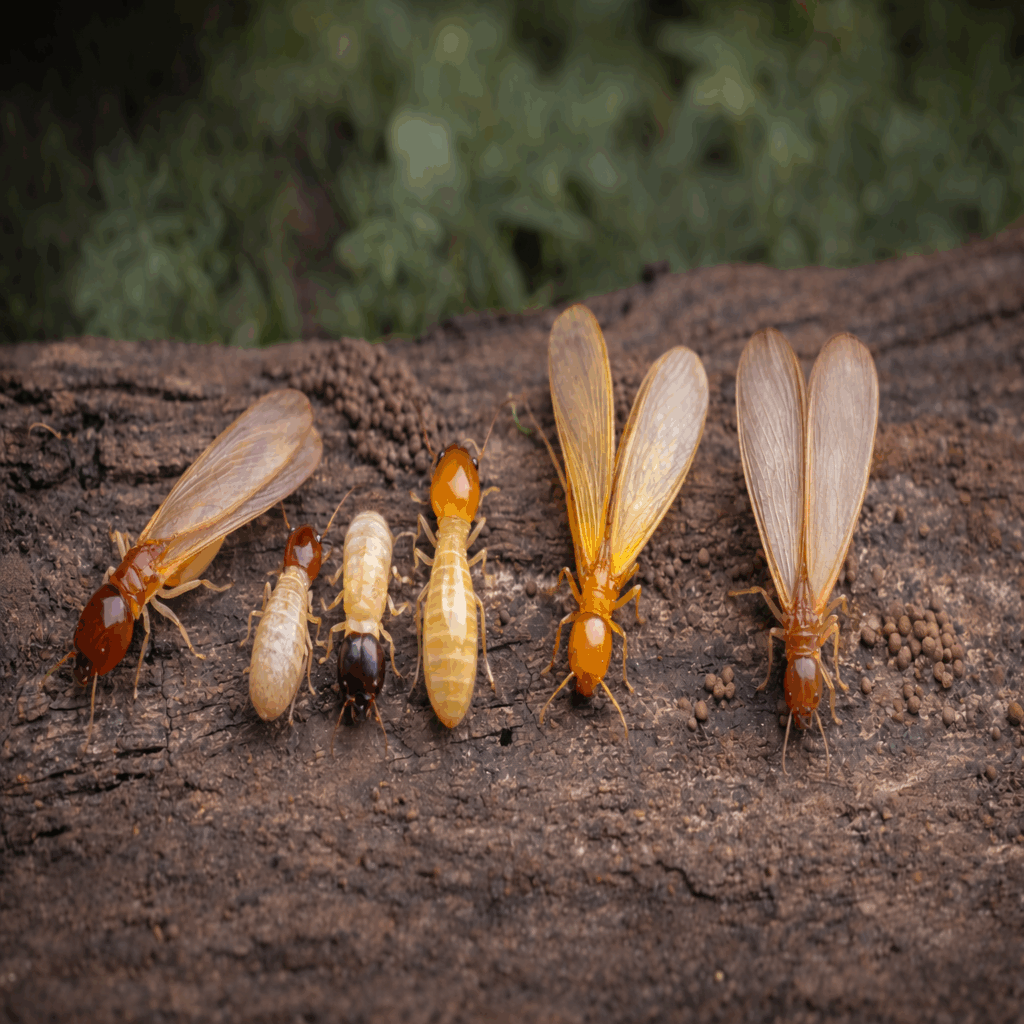
Termites are not all the same.
If you’ve spotted signs of termites in your home (tiny wings, hollow-sounding wood, or mud tubes) you’re not alone. Termites are among the most common and costly pests in Southern California. Not all termites behave the same way, and knowing which species you’re dealing with can make all the difference in how you protect your property.
At Talos Pest Control, we provide custom termite control solutions based on the exact species invading your home. Let’s look at the five most common termite species in San Diego, how to identify them, and what each means for your home.
1. Western Drywood Termite (Incisitermes minor)
Where they live: Inside dry wood: attics, framing, furniture, and even baseboards.
Identification:
- Creamy-white to light brown bodies.
- Winged swarmers about ½ inch long.
- No need for soil contact; colonies live entirely within wood.
Signs of infestation:
- Tiny hexagonal “pellets” (dry fecal droppings).
- Blistered paint or hollow wood sounds.
Why it matters: Drywood termites can remain hidden for years, silently hollowing out wood. They’re one of the hardest species to detect without a professional inspection.
Treatment options: Structural fumigation or localized treatments—both offered through Talos’s non-invasive and eco-friendly termite control methods.
2. Subterranean Termite (Reticulitermes hesperus)
Where they live: Underground in moist soil.
Identification:
- Creamy white workers; darker-headed soldiers.
- Winged swarmers in spring.
- Build characteristic mud tubes along foundations and walls.
Signs of infestation:
- Mud tubes on exterior walls or slabs.
- Warped flooring or bubbling paint.
- Swarmers emerging from baseboards after rain.
Why it matters: Subterranean termites are responsible for the majority of termite damage in California. They can undermine structural integrity quickly if untreated.
Treatment options: Soil barrier systems and baiting strategies that target colonies directly—part of Talos’s Comprehensive Termite Defense Program.
3. Formosan Termite (Coptotermes formosanus)
Where they live: In both soil and wooden structures; highly invasive.
Identification:
- Larger than native subterranean termites.
- Swarmers with yellowish-brown bodies and dense wings.
- Build massive colonies with millions of members.
Signs of infestation:
- Thick mud nests inside walls.
- Rapid wood consumption (Formosans can destroy a structure in months).
Why it matters: Known as “super termites,” Formosans are aggressive, fast-spreading, and hard to control without professional help.
Treatment options: Multi-stage soil treatments and targeted wood applications offered by Talos Pest Control’s licensed experts.
4. Desert Dampwood Termite (Paraneotermes simplicicornis)
Where they live: In damp, decaying wood—fences, decks, or tree stumps.
Identification:
- Larger body size (up to ¾ inch).
- Swarmers have long wings and a reddish-brown tint.
- Prefer high-moisture environments.
Signs of infestation:
- Wood appears soft, dark, and decayed.
- Presence of moisture and fungus.
Why it matters: While less common indoors, dampwood termites often indicate underlying moisture issues that could attract other pests.
Treatment options: Moisture control and removal of infested wood are key. Talos technicians pair moisture remediation with preventative termite treatments.
5. Arid-Land Subterranean Termite (Reticulitermes tibialis)
Where they live: In dry soil regions and structural wood near the ground.
Identification:
- Small colonies, light-colored workers.
- Often mistaken for ants during swarming.
Signs of infestation:
- Mud tubes in crawl spaces or foundations.
- Swarming during hot, dry months.
Why it matters: Common in drier inland areas of San Diego County, these termites can cause serious damage before detection.
Treatment options: Talos’s barrier treatments and regular inspections keep colonies from expanding under slab foundations.
How to Protect Your Home from Termites
- Schedule annual inspections. Early detection prevents expensive repairs.
- Reduce moisture around foundations—fix leaky sprinklers, gutters, or pipes.
- Keep wood elevated and sealed; avoid direct soil contact.
- Seal cracks and crevices where swarmers might enter.
- Call a professional at the first sign of damage or swarm activity.
Pro Tip: Regular maintenance and preventative treatments are often more affordable than structural repairs after an infestation.
Partner with San Diego’s Trusted Termite Experts
At Talos Pest Control, our specialists are trained to identify termite species and customize a solution that fits your property’s needs—whether that means fumigation, spot treatment, or soil barriers.
Protect your investment before termites take over.
👉 Schedule your termite inspection today.