
Spiders in San Diego Homes Are More Common Than You Think
Southern California’s year-round mild climate is perfect for beaches, and for spiders. Warm weather, steady humidity, and ample food sources allow dozens of species to thrive in and around homes.
Most are harmless and even helpful in keeping other insects in check, but a few can pose health risks or indicate bigger pest problems.
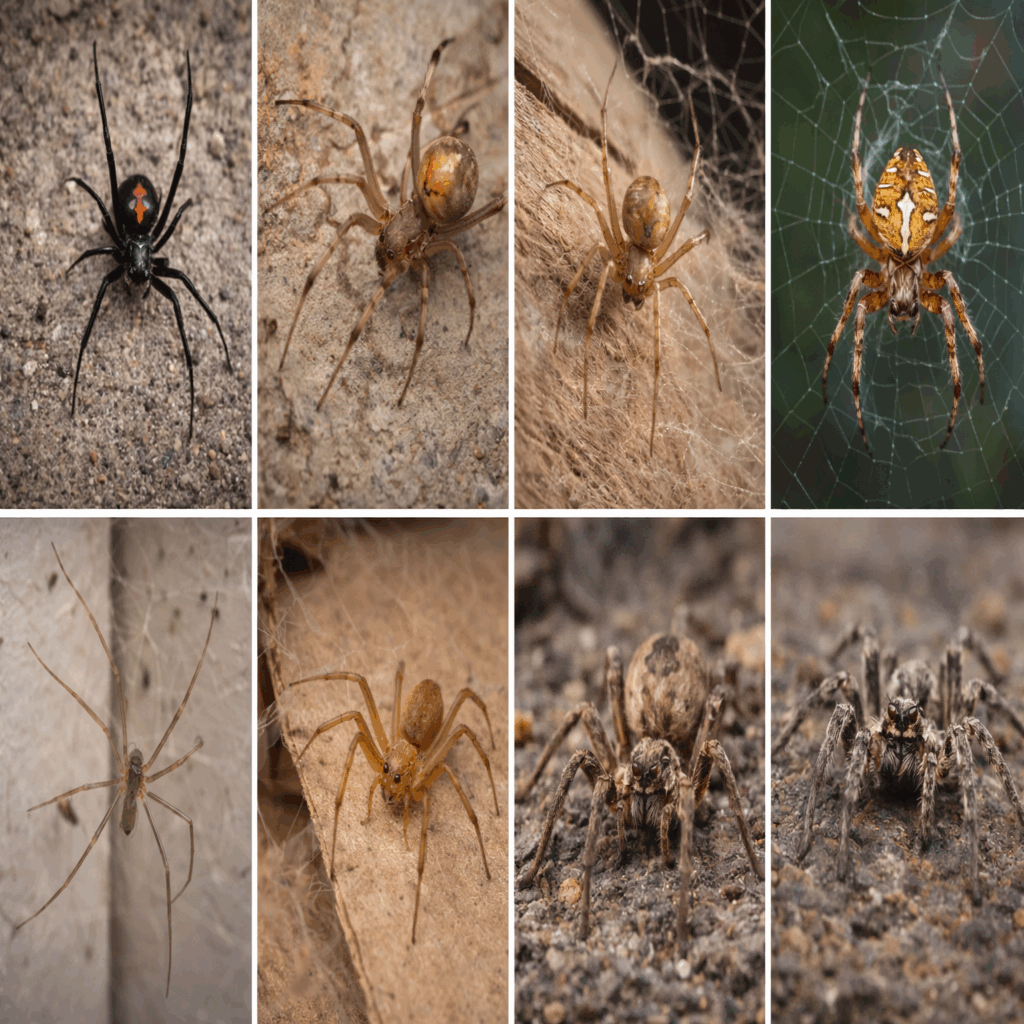
At Talos Pest Control, we identify the exact species infesting your home so we can deliver targeted, long-term protection. Here are the seven most common spider species you’re likely to encounter, and why they matter.
1. Black Widow Spider (Latrodectus mactans)
Identification:
- Shiny black body with distinct red hourglass on the abdomen.
- Females measure about ½ inch; males smaller and lighter colored.
Habitat: Dark, undisturbed areas: garages, sheds, woodpiles, and crawl spaces.
Risk Level: High. Their bite is venomous and can cause severe muscle pain and nausea.
Control Tip: Wear gloves when moving stored items and call for professional removal if you spot their irregular webs close to the ground.
2. Brown Widow Spider (Latrodectus geometricus)
Identification:
- Light gray to tan color with orange or yellow hourglass marking.
- Spiky egg sacs that look like tiny sea urchins.
Habitat: Eaves, patio furniture, mailboxes, and under outdoor chairs. Especially near coastal San Diego.
Risk Level: Moderate. Less toxic than the black widow but still painful if provoked.
Control Tip: Vacuum egg sacs and use residual barrier treatments around porches and patios.
3. Cellar Spider (“Daddy Longlegs,” Pholcus phalangioides)
Identification:
- Long, skinny legs and a tiny oval body.
- Light tan or gray color.
Habitat: Basements, attics, and corners of ceilings.
Risk Level: Low. Completely harmless to humans. They feed on smaller spiders and insects.
Control Tip: Vacuum away webs and reduce clutter to limit nesting spots.
4. Domestic House Spider (Parasteatoda tepidariorum)
Identification:
- Brownish spider with round abdomen and faint striping.
- Builds messy, tangle-style webs in window corners and closets.
Habitat: Indoors, especially in rooms with low traffic.
Risk Level: Low. Bites are rare and non-toxic.
Control Tip: Regular cleaning and vacuuming around windows and baseboards keeps them away.
5. Desert Recluse Spider (Loxosceles deserta)
Identification:
- Tan to light brown with a distinct violin-shaped mark on the back.
- Six eyes arranged in pairs (not eight like most spiders).
Habitat: Dry, secluded spots: attics, garages, stored clothing, and cardboard boxes.
Risk Level: High. Venom can cause ulcerating skin wounds that require medical attention.
Control Tip: Shake out clothes and boots before wearing them and call Talos for safe inspection if you suspect recluses.
6. Orb-Weaver Spider (Araneidae family)
Identification:
- Large, colorful abdomen (often orange or yellow) and long legs.
- Spins classic round wheel-shaped webs outdoors.
Habitat: Gardens, trees, and porch lights where insects are plentiful.
Risk Level: Low. Beneficial for controlling mosquitoes and flies.
Control Tip: Relocate webs if they block doorways but avoid destroying outdoor populations unless they become a nuisance.
7. Wolf Spider (Lycosidae family)
Identification:
- Large (½ inch to 1½ inches), hairy, and gray or brown with prominent eyes.
- Doesn’t build webs; hunts on the ground.
Habitat: Yards, garages, and entryways; occasionally wander indoors.
Risk Level: Moderate. Not aggressive but may bite if cornered.
Control Tip: Seal door gaps and use outdoor barrier treatments to prevent entry.
Preventing Spiders in Southern California Homes
- Seal entry points around doors, vents, and windows.
- Reduce clutter in garages and closets.
- Eliminate other insects, since spiders follow their food sources.
- Keep outdoor lights off when possible to avoid attracting prey insects.
- Schedule routine pest inspections for year-round peace of mind.
Professional Spider Control That Works
While most spiders are beneficial, a few pose risks that require professional attention. Our experts at Talos Pest Control use safe, eco-friendly methods to:
- Identify dangerous species like widows and recluses.
- Remove infestations at their source.
- Create preventive barriers to keep spiders from returning.