
Unlike colder regions where freezing winters eliminate many pests, Southern California offers rodents a year-round playground. Mild temperatures, coastal humidity, and constant food sources keep rats and mice active through all four seasons, just in different ways.
At Talos Pest Control, we track these seasonal patterns across San Diego County and know exactly when and why infestations surge. Understanding these cycles helps you protect your home before rodents make themselves at home in your attic, walls, or garage.
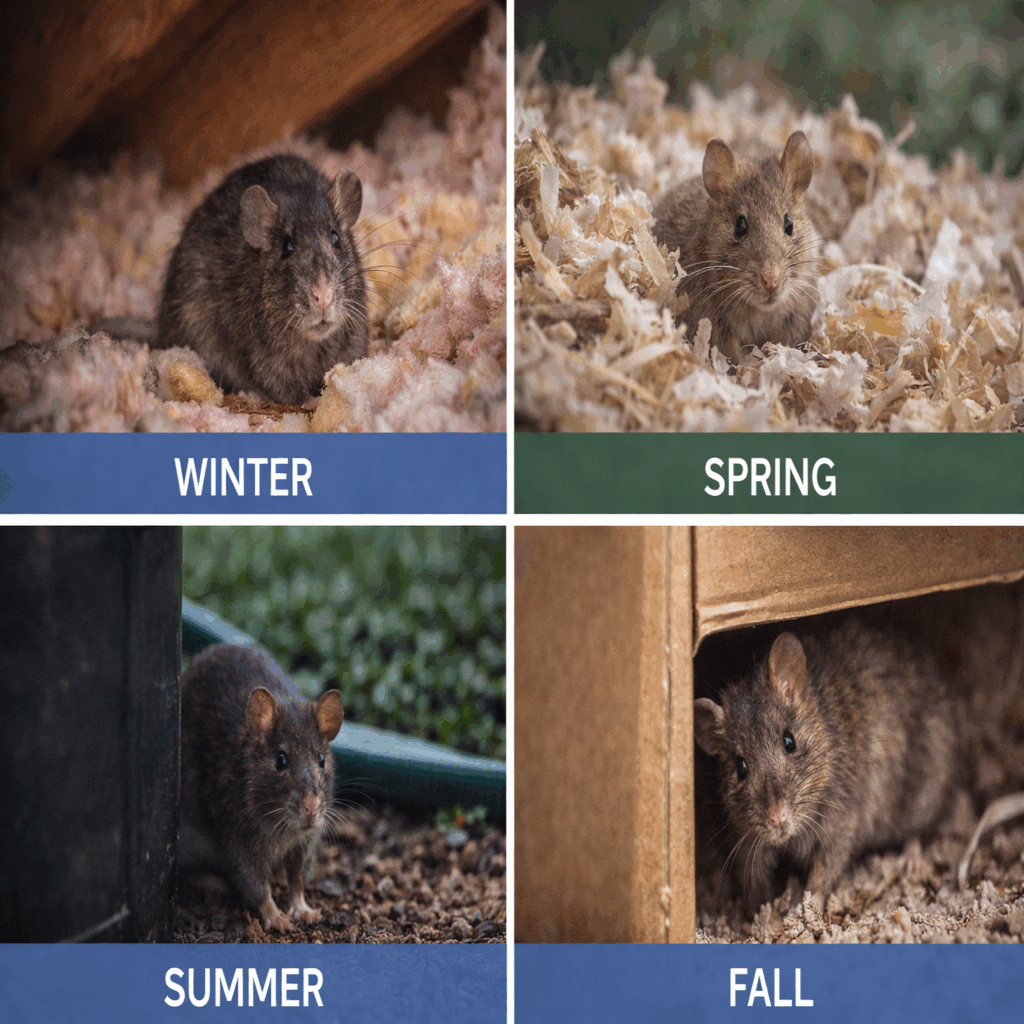
1. Winter (December-February): Seeking Warmth Indoors
What Happens:
When temperatures drop into the 40s and 50s, rodents move from outdoor nests into attics, garages, and wall voids seeking shelter and warmth. Roof rats and house mice are especially common this time of year.
Signs to Watch For:
- Scratching or scurrying in ceilings at night.
- Droppings near insulation, pantries, or storage boxes.
- Chewed wires or gnawed entry points.
How to Prep:
✅ Seal gaps around vents, pipes, and foundation cracks.
✅ Store pet food and grains in airtight containers.
✅ Trim vegetation and tree branches touching your roofline.
✅ Schedule a professional rodent inspection before nesting peaks in January.
Pro Tip: Roof rats in San Diego are most active during cold, rainy nights, making attic spaces prime real estate.
2. Spring (March-May): Nesting and Rapid Reproduction
What Happens:
Spring signals mating season. As food becomes abundant outdoors, rodents start breeding aggressively. A single pair of mice can produce up to 10 litters per year, each with 5–10 pups.
Signs to Watch For:
- Fresh gnaw marks around baseboards or food containers.
- Nests made from shredded paper or insulation.
- Increased sightings around dusk or dawn.
How to Prep:
✅ Inspect attics, garages, and sheds for nesting materials.
✅ Remove clutter and cardboard boxes; favorite nesting spots.
✅ Repair torn screens and seal foundation gaps smaller than ½ inch.
✅ Maintain yard hygiene by clearing palm fronds and debris piles.
Pro Tip: San Diego’s coastal moisture in spring encourages rodent breeding near gardens, compost piles, and outdoor storage areas.
3. Summer (June-August): Outdoor Foraging & Expansion
What Happens:
Rodents move outdoors more often, nesting in shrubs, woodpiles, and sheds. However, they still invade homes in search of water and cooler indoor spaces during hot months.
Signs to Watch For:
- Activity near outdoor trash cans, compost bins, or BBQ areas.
- Burrows under decks or patios.
- Chewing on irrigation lines or garden hoses.
How to Prep:
✅ Eliminate standing water and fix leaky faucets.
✅ Keep garbage bins tightly sealed.
✅ Store firewood at least 18 inches off the ground and away from walls.
✅ Treat perimeters with professional repellents or exclusion barriers.
Pro Tip: In hotter inland areas, rats seek refuge in garage storage areas and attics. Especially if there’s air conditioning or consistent shade.
4. Fall (September-November): The Surge Before Winter
What Happens:
As nights cool and food sources dwindle outdoors, rodents start migrating indoors en masse. This is the most active season for infestations in Southern California.
Signs to Watch For:
- Nocturnal noises increase significantly.
- Droppings and oily rub marks appear along baseboards.
- Nesting materials found in insulation or storage boxes.
How to Prep:
✅ Conduct a full home perimeter inspection before cooler weather hits.
✅ Replace damaged weatherstripping on doors and windows.
✅ Clean gutters; rodents use debris piles to nest.
✅ Schedule preventive service with Talos Pest Control for exclusion and monitoring.
Pro Tip: Most homeowners in San Diego discover rodent infestations in fall, not winter, rodents prepare early for colder months ahead.
5. Why Southern California Homes Are Vulnerable Year-Round
- Consistent warmth: No hard freezes to break breeding cycles.
- Urban density: Close-proximity housing allows easy migration between structures.
- Abundant food: Fruit trees, pet food, compost bins, and trash attract rodents year-round.
- Coastal climate: Humid air keeps rodents hydrated and comfortable even in dry months.
Because there’s no “off-season,” a one-time fix rarely works. Effective protection requires year-round prevention and maintenance.
6. Year-Round Rodent Prevention Checklist
| Season | Risk Level | Primary Action Items |
| Winter | High | Seal openings, inspect attics, eliminate food storage issues |
| Spring | High | Remove nesting materials, maintain landscaping |
| Summer | Moderate | Eliminate water sources, clean up outdoor clutter |
| Fall | Very High | Perform full inspection, repair screens, schedule treatments |
7. Professional Rodent Control & Exclusion You Can Trust
At Talos Pest Control, we use a comprehensive approach to manage rodents based on seasonal behavior and environmental conditions unique to San Diego County.
Our services include:
- Thorough inspection to identify active and potential entry points.
- Targeted treatment using safe, eco-friendly methods.
- Rodent exclusion and sealing to prevent re-entry.
- Ongoing monitoring to maintain a rodent-free environment year-round.
Don’t wait for the scratching in your walls. By then, rodents have already made themselves at home.