

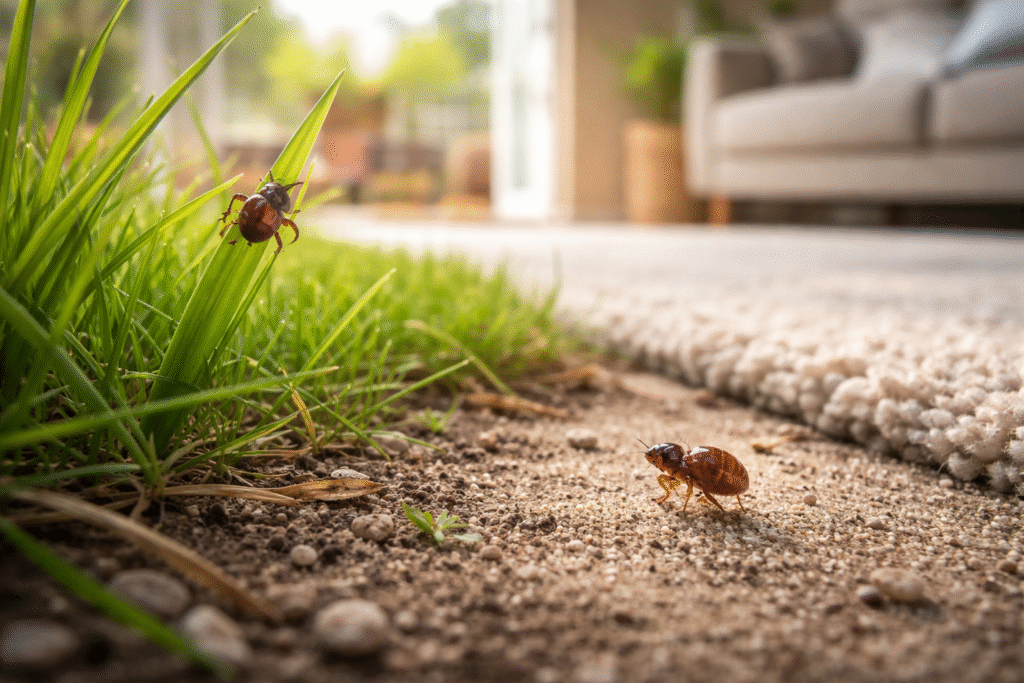
Fleas and ticks may be small, but the problems they cause can escalate quickly, especially for households with pets. Thanks to San Diego’s warm, predictable weather, these pests don’t follow a strict season, and many infestations start quietly long before homeowners realize there’s an issue.
Catching an infestation early can prevent weeks of discomfort, costly treatments, and potential health risks. Below are the early warning signs that fleas or ticks may already be present in your home or yard, even if you haven’t seen one yet.
Why Fleas and Ticks Are a Common Problem in San Diego
San Diego provides ideal conditions for fleas and ticks:
- Mild temperatures year-round
- Coastal and inland humidity pockets
- Pet-friendly neighborhoods and green spaces
- Wildlife such as rodents, raccoons, and stray animals
Because these pests often enter homes undetected, early identification is critical.
Early Signs of Fleas in Your Home or Yard
1. Pets Scratching, Biting, or Grooming Excessively
One of the first and most common signs of fleas is persistent scratching, especially around:
- Neck and shoulders
- Base of the tail
- Belly and inner thighs
Fleas feed frequently, and pets often react before humans notice any insects.
2. Flea Dirt on Pets or Bedding
Flea dirt looks like small black specks, similar to ground pepper.
- Found on pet fur, bedding, or carpets
- When placed on a damp paper towel, it turns reddish-brown (digested blood)
This is one of the most reliable indicators of an active flea infestation.
3. Small Red Bites on Ankles or Legs
Flea bites on humans often:
- Appear in clusters or lines
- Occur on ankles, feet, or lower legs
- Cause intense itching
Bites may be mistaken for mosquitoes but often recur daily if fleas are present indoors.
4. Fleas Visible on Floors or Carpets
Adult fleas are:
- Very small (about ⅛ inch)
- Dark brown or black
- Extremely fast jumpers
Seeing even one flea indoors usually means many more are hidden in carpets, furniture, or pet areas.
Early Signs of Ticks in Your Home or Yard
5. Ticks Found on Pets After Outdoor Time
Ticks commonly attach to:
- Ears and neck
- Between toes
- Under collars
Unlike fleas, ticks embed themselves into skin and remain attached for long periods.
6. Unexplained Bites or Skin Irritation on People
Tick bites often:
- Appear as a single red bump
- Are painless at first
- May become swollen or irritated
Ticks are most often picked up in yards, tall grass, or landscaped areas.
7. Ticks Found Indoors Near Entry Points
Ticks may be found:
- Near doorways or baseboards
- On pet beds or furniture
- Crawling on walls or floors
Indoor ticks often hitchhike on pets or clothing.
Yard Signs That Fleas or Ticks Are Present
8. Shaded, Moist Areas with Heavy Ground Cover
Fleas and ticks thrive in:
- Tall grass
- Leaf piles
- Dense shrubs
- Under decks and fences
These areas act as breeding and resting zones, especially when wildlife passes through.
9. Increased Wildlife or Stray Animal Activity
Raccoons, rodents, feral cats, and other animals can introduce fleas and ticks into yards without homeowners realizing it.
Why Flea and Tick Problems Get Worse Quickly
Fleas reproduce rapidly:
- Eggs can hatch in days
- Larvae hide deep in carpets and soil
- Pupae can remain dormant for weeks
Ticks are harder to spot and can survive for long periods without feeding.
DIY treatments often kill adults only, leaving eggs and larvae untouched — which is why infestations frequently return.
When to Call a Professional for Flea and Tick Control
You should consider professional treatment if:
- Fleas or ticks keep reappearing
- Pets continue scratching despite treatment
- Bites are occurring indoors
- Your yard shows signs of infestation
Professional flea and tick control targets:
- Adults, larvae, and eggs
- Indoor and outdoor environments
- Entry points and harborage areas
Professional Flea and Tick Control in San Diego
Talos Pest Control offers comprehensive flea and tick control services designed specifically for San Diego homes and yards. Our treatments focus on eliminating infestations at the source while helping prevent future outbreaks.
Early action can save time, money, and discomfort, especially for pets.