
Ticks are often associated with hiking trails and deep woods, but the reality is much closer to home. A large percentage of tick encounters actually happen in residential yards during everyday activities like gardening, mowing, or letting pets outside.
For homeowners, that means tick control isn’t just about avoiding the outdoors. It’s about understanding where ticks live around your property and actively making those areas less inviting.
In this guide, we’ll break down the most common tick habitats around your yard and exactly how to disrupt them. If you’re in Southern California or similar climates, these strategies are especially important for year-round prevention.
Why Ticks Choose Certain Areas
Ticks are not random. They’re highly selective about where they live. Most species prefer:
- Moist, humid environments
- Shade and protection from sunlight
- Access to hosts (animals or humans)
In fact, ticks thrive in shady, wooded, and grassy areas with dense vegetation, where they can wait on plants and attach to passing hosts.
That means your yard can unintentionally create perfect conditions if it’s not maintained with tick prevention in mind.
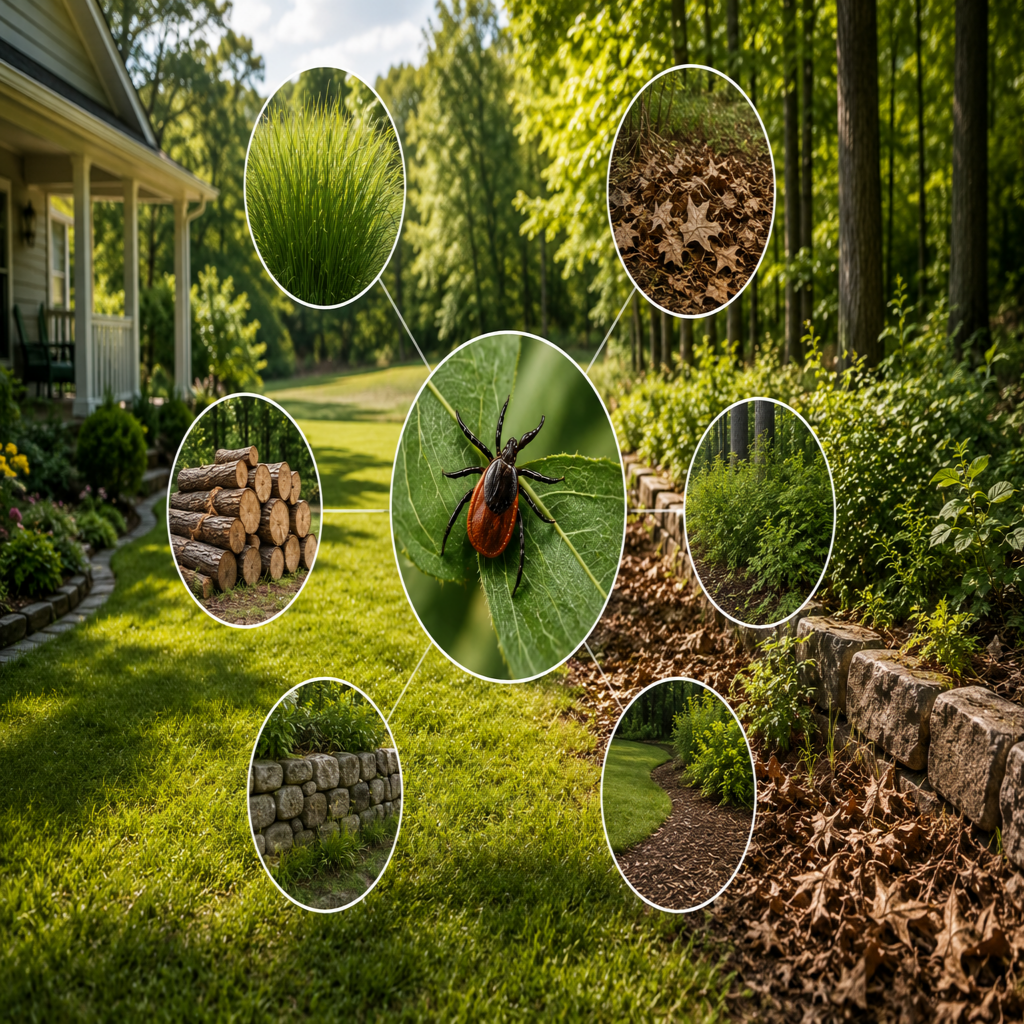
1. Leaf Litter and Yard Debris
Why It Attracts Ticks
Piles of leaves, branches, and organic debris trap moisture and create a cool, protected environment. Exactly what ticks need to survive and reproduce.
How to Make It Unfriendly
- Remove leaf litter regularly, especially in fall and spring
- Clear brush piles and fallen branches
- Dispose of yard waste instead of letting it accumulate
Reducing debris is one of the most effective ways to eliminate tick habitat at the source.
2. Tall Grass and Overgrown Vegetation
Why It Attracts Ticks
Ticks use tall grass and weeds to “quest”. They climb up vegetation and wait for a host to brush past.
How to Make It Unfriendly
- Mow your lawn frequently
- Trim weeds along fences and structures
- Keep grass short and consistent
Well-maintained lawns are significantly less attractive to ticks because they reduce humidity and exposure opportunities.
3. Woodpiles and Storage Areas
Why It Attracts Ticks
Firewood stacks and cluttered storage areas attract rodents like mice, one of the primary hosts for ticks.
How to Make It Unfriendly
- Stack wood neatly and off the ground
- Store wood in dry, sunny areas
- Remove unused items, furniture, or debris
Eliminating rodent shelter helps break the tick life cycle and reduces the likelihood of infestation.
4. Shaded Landscaping and Dense Shrubs
Why It Attracts Ticks
Ticks prefer cool, shaded areas and avoid direct sunlight.
Dense shrubs, hedges, and tree canopies create ideal microclimates for tick survival.
How to Make It Unfriendly
- Trim bushes and hedges regularly
- Prune tree branches to allow more sunlight
- Thin out dense landscaping
Increasing sunlight exposure makes your yard naturally hostile to ticks.
5. Yard Edges (Transition Zones)
Why It Attracts Ticks
The border between your yard and natural areas, like wooded edges or unmanaged land, is one of the most active tick zones.
How to Make It Unfriendly
- Install a 3-foot barrier of gravel or wood chips
- Keep edges clear of brush and tall grass
- Avoid placing seating or play areas near these zones
These buffer zones reduce tick migration into your yard.
6. Wildlife Pathways and Animal Activity
Why It Attracts Ticks
Ticks don’t travel far on their own. They rely on animals like:
- Deer
- Rodents
- Birds
- Pets
These hosts carry ticks directly into your yard.
How to Make It Unfriendly
- Install fencing to deter deer
- Remove food sources (fallen fruit, pet food)
- Keep bird feeders away from the house
- Use tick prevention for pets
Controlling wildlife access is one of the most overlooked, but critical, steps in tick prevention.
7. Outdoor Living Areas in the Wrong Location
Why It Attracts Ticks
Playsets, patios, and seating areas placed near shaded or overgrown areas increase the risk of contact.
How to Make It Unfriendly
- Move play equipment to sunny, open areas
- Keep patios and decks away from yard edges
- Maintain clear space around high-use areas
Positioning matters. Keeping activity zones in dry, sunny areas reduces exposure significantly.
Natural Ways to Make Your Yard Less Attractive to Ticks
Beyond habitat removal, you can take additional steps to create a tick-resistant environment:
- Plant tick-repelling plants like lavender, rosemary, and mint
- Keep your yard dry and well-drained
- Reduce clutter and hiding spots
- Maintain consistent landscaping routines
Ticks thrive in neglected spaces, so consistency is key.
When DIY Prevention Isn’t Enough
Even with great yard maintenance, ticks can still find their way in. Especially in areas with high wildlife activity or neighboring untreated properties.
Professional pest control becomes important when:
- Tick activity persists despite maintenance
- Pets are repeatedly bringing ticks inside
- You live near open land, trails, or wooded areas
Targeted treatments can reduce tick populations at every life stage and provide long-term protection.
Build a Tick-Unfriendly Property
Tick control isn’t about one solution. It’s about removing the conditions that allow them to survive.
To recap, focus on:
- Eliminating moisture and shade
- Reducing vegetation density
- Managing wildlife access
- Maintaining a clean, well-kept yard
When you take these steps, you’re not just reducing ticks. You’re actively protecting your family, pets, and property.
Need help creating a truly tick-free yard?
Visit Talos Pest Control to learn more about professional flea and tick treatments designed to protect your home year-round.