Ant control in San Diego
Our approach to ant pest control focuses on targeted solutions that identify the activity, evaluate entry points, and recommend the treatment your San Diego home deserves.
Why do ants keep coming back?
Argentine ant colonies have many queens and connect across yards, so sprays usually kill only the workers you see. Slow-acting baits carried back to the nest, plus sealing entry points and trimming plants off the house, work better.
Which ant is it?
| Ant | Look | Where you see it | Notes |
|---|---|---|---|
| Argentine ant | small, light to dark brown | long trails along baseboards, counters, sinks | many queens; spraying can scatter colonies |
| Odorous house ant | small, dark brown to black | kitchens and bathrooms | smells like rotten coconut when crushed |
| Carpenter ant | large, black or reddish | wood near moisture, at night | leaves wood shavings; doesn’t eat wood |
An inspection confirms the species.
Source: UC IPM Ants

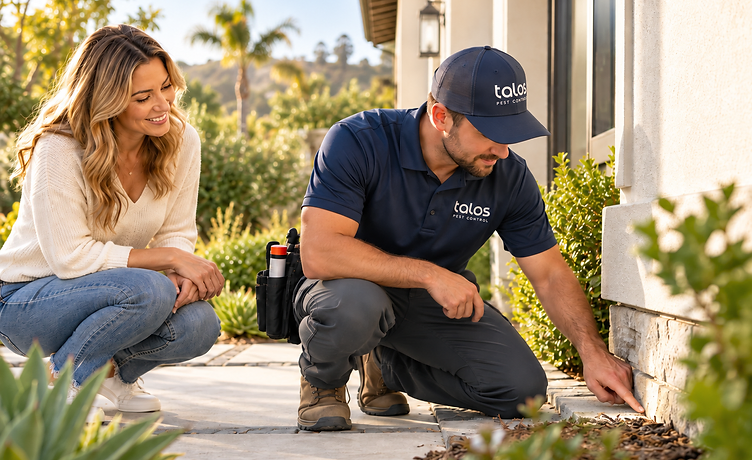
Inspect to find where ants enter and nest
Our process begins with a thorough inspection to identify where ants are entering and nesting. We evaluate ant trails, likely nest locations, entry points, moisture, food sources, and landscaping — so treatment matches the species and the property.

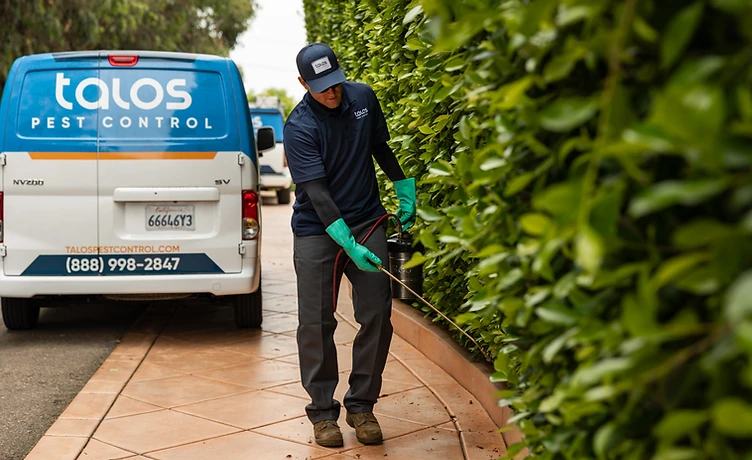
Targeted treatment for every colony
Once identified, we implement targeted treatment options — applying sprays and granules to active outdoor areas and placing ant bait traps in high-activity zones indoors. A customized plan addresses your unique needs so you find comfort in every corner of your home.
A single ant colony can house thousands of members, making them one of the most persistent household invaders.
When ants invade your home, the problem is rarely just what you see. Behind every trail is a larger colony, and often multiple nests, continuing to grow out of sight. Talos provides targeted ant control in San Diego, treating infestations at the source and preventing them from coming back.
Get a Quote →Our ant control process
Inspect
Evaluate ant trails, likely nest locations, entry points, moisture, food sources, landscaping, and previous treatment attempts.
Identify
Assess the ant type and activity pattern so the treatment strategy matches the likely species and colony behavior.
Treat
Apply the right combination of baits, non-repellent materials, residual applications, nest-focused treatment, and targeted interior or exterior service.
Prevent & Follow Up
Provide sanitation, moisture, landscaping, and entry-point recommendations, then complete covered follow-up service per your plan.
Signs you may have an ant infestation
Visible ants are often workers from a colony hidden elsewhere on the property. These indicators help determine whether activity warrants a professional intervention.
Get a QuoteRepeated ant trails along counters, walls, baseboards, windows, plumbing lines, or exterior foundations
Ants returning after cleaning or surface spraying
Activity around sinks, kitchens, pet food, trash, recycling, or moisture sources
Winged ants or sudden increases in ant activity
Soil, debris, or activity emerging from cracks, slabs, landscaping, or wall gaps
Large ants associated with damp or damaged wood
Ant activity in more than one area of the home


If ants come back, so do we
Talos is dedicated to delivering precise and effective ant control that ensures your concerns are fully handled. Should ant activity persist between scheduled visits, our friendly and experienced experts will return at no additional cost.
Get a QuoteUnderstanding & preventing ant infestations
Knowing why ants are drawn indoors is the first step to keeping them out. Below, the conditions that invite activity — and the steps that help prevent it.
The conditions that draw ants indoors
Food
Crumbs, spills, open containers, pet food, grease, recycling residue, and unsealed trash attract foraging ants.
Water & Moisture
Plumbing leaks, condensation, overwatering, standing water, and damp soil near foundations support ant activity.
Entry Points
Gaps around doors, windows, utility penetrations, foundations, vents, and siding provide access.
Landscaping
Branches, vines, mulch, irrigation, and vegetation touching the home create pathways or nesting areas.
Weather
Heat, rain, drought, and seasonal changes shift ant activity indoors or into new nesting areas.
Existing Colonies
Visible ants may be workers from colonies inside walls, below slabs, in landscaping, or elsewhere.
How to help prevent ant activity
Store food and pet food in sealed containers.
Clean crumbs, spills, grease, and food residue promptly.
Rinse recycling and keep trash containers closed and clean.
Repair plumbing leaks and reduce standing water or excessive moisture.
Trim vegetation away from the structure and avoid heavy mulch against exterior walls.
Seal accessible gaps around doors, windows, utility lines, and foundations when appropriate.
Avoid repeatedly spraying ant trails without understanding the species and nest location.
Follow the technician’s property-specific recommendations after service.
Ant control in San Diego County
Ants are a frequent call and one of the easiest pests to mistreat. Colony structure and species determine whether the problem resolves or comes straight back.
The species that matter here
Argentine ants dominate most of the county, forming interconnected colonies that share territory rather than competing, which is why spraying a trail of them makes the problem worse. Odorous house ants, harvester ants, and fire ants show up more in the drier inland areas, and carpenter ants nest in moisture-damaged wood around eaves, decks, and window frames.
Why store-bought sprays fail
Wiping out the ants you can see triggers colony splitting in Argentine ants, turning one trailing line into several new colonies. Carpenter ants respond the same way when the main nest is attacked without the satellite nests being addressed. Baiting and targeted treatment follow the colony back to its source instead.
What our service involves
We identify the species, trace the trail to its source, and treat the conditions drawing ants in, including moisture and vegetation contact with the structure. Because ants here are temperature-driven, service continues through the year, and we return between scheduled visits if activity comes back.
Serving San Diego County
Active across San Diego County — coastal communities, inland neighborhoods, North County, East County, and South Bay.
What San Diego homeowners say about our ant control
“Absolutely WONDERFUL! Antonio was so helpful, Nate was so kind. I cannot express how much I appreciate this company! Waking to NO ANTS this morning was incredible ! Well worth contacting if u are battling ants ! Thank you sooooo much!”
“I couldn't be happier with Talos Pest Control! We started having an issue with ants and a few other bugs around the house, and they came out right away. The technician was super friendly, explained everything clearly, and made sure we understood what they were doing. Since their visit, we haven't seen a single bug! I also really appreciate how professional and reliable they've been—great communication and always on time. Highly recommend them to anyone looking for a trustworthy pest control company here locally!”
“Carlos is a true professional! He first verified address, introduced himself, said who he represents and why he was at my home. He surveyed my home and provided details of his plan to get rid of the spiders and ants. When he was done, he shared what he accomplished, made recommendations, and confirmed my next appointment and what the next visit will include. He was thorough and personable. I really appreciated his service. Thank you Carlos!”
“We have been having Talos coming out every 2 months for preventive treatments, and have also called them for other pest issues like termites and ants. Always prompt response and treatment with advice on how best to eliminate the source. They have a wonderful team. Fernando, Joey, JB, and Nick have all helped us out in the past. Highly recommend.”
Questions, answered
Argentine ants are the household ant seen most often in California. Other pest ants include odorous house ants, pavement ants, carpenter ants, Pharaoh ants, thief ants, and southern fire ants. The correct treatment depends on the species, nest location, and property conditions, so identification may require an inspection.
Ants enter homes while searching for food, water, shelter, or a more favorable nesting location. Crumbs, pet food, spills, plumbing leaks, moisture near foundations, unsealed trash, vegetation touching the structure, and small gaps around doors, windows, utility lines, and foundations can all contribute.
Common signs include repeated ant trails, ants around sinks or food storage areas, activity near windows or baseboards, small soil piles near cracks, winged ants, or activity that returns after surface spraying. The visible ants may represent only a small portion of a larger colony.
Many household ants are primarily a nuisance, but some species may bite or sting, contaminate food, tend plant pests, or nest in structures. Carpenter ants excavate wood to create nesting galleries and may be associated with damp or damaged wood. A professional inspection can distinguish ant activity from termite activity.
Talos begins by inspecting ant trails, likely entry points, moisture conditions, food sources, nesting areas, and other contributing conditions. Depending on the species and location, treatment may include baits, non-repellent materials, residual applications, direct nest treatment, targeted interior service, exterior perimeter treatment, and recommendations involving sanitation, moisture, landscaping, or entry points.
Treatment areas depend on where the ants are active, the species involved, the inspection findings, and the selected service plan. Service may include targeted interior treatment and exterior treatment around foundations, entry points, landscaping interfaces, or other activity areas.
A surface spray may kill visible worker ants without reaching the nest, queens, or connected colonies. Some products can also interrupt trails or cause activity to shift. Effective control often requires species identification, locating contributing colonies, and a targeted treatment strategy.
Sprays usually kill only foragers and can split Argentine ant colonies; baits and sealing work better.
Rain floods nests and heat dries them out, so ants look for water and shelter indoors.
Take back your home with a pest control plan built around you.
Talos has pest control experts throughout San Diego County. Get a personalized quote and a tailored plan built around your home.
Related pest control resources
Why Pests Invade Homes in San Diego
Learn how infestations happen and how to stop them.
Read Article →Service PlansGeneral Pest Control Plans
One-time and recurring pest control options for different needs.
View Plans →CoverageSan Diego Pest Control Service Areas
Coastal, inland, North County, East County, and South Bay.
Our Service Areas →Sources
- UC IPM · Ants
Guidance above follows these university references. They describe general conditions for the region, not conditions at any single property.