Rodent control in San Diego
Roof rats in the attic, mice in the kitchen, rats under the deck: we find how they get in, remove them with trapping and secured bait, and seal the entry points. Free estimate.
How do you get rid of rats in a San Diego home?
Find and seal the entry points, trap or bait where activity is confirmed, then follow up until activity stops. Trapping without sealing usually means the next rodent uses the same gap. Roof rats often enter high, at rooflines, vents and branches touching the house.
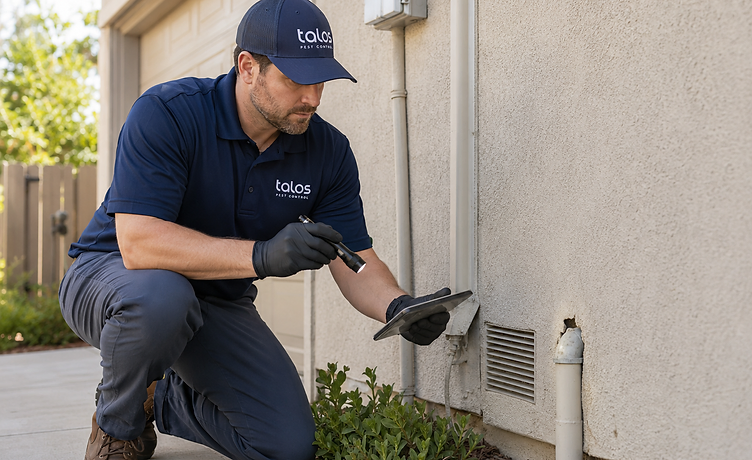
Inspect to find where rodents enter and nest
Our process begins with a thorough inspection to identify the rodent, where it is entering, and where it is nesting. We evaluate droppings, rub marks, gnaw damage, entry points, attics, crawl spaces, garages, and landscaping — so treatment matches the rodent and the property.

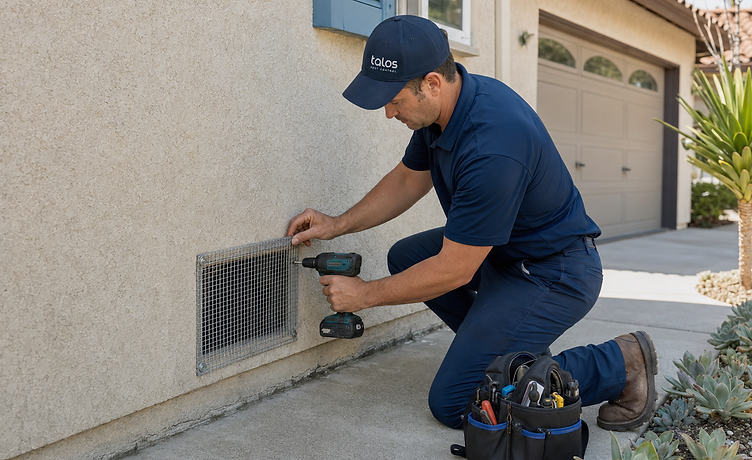
Targeted treatment and exclusion for every infestation
Once identified, we combine trapping, secured baiting, and exclusion — sealing the gaps rodents use to get in. A customized plan addresses your property so you find comfort in every corner of your home without activity returning.
A single pair of roof rats can produce dozens of offspring in a year.
Behind every sighting there’s usually a nest in an attic, wall or crawl space. Talos removes the active rodents, seals the gaps they use, and follows up to confirm the exclusion is holding.
Source: UC IPM Rats
Get a Quote →Roof rat, Norway rat or house mouse?
| Rodent | Where it nests | How it gets in | Droppings |
|---|---|---|---|
| Roof rat | Attics, trees, ivy, palms | Climbs to rooflines, vents, branches; openings about 1/2 inch | About 1/2 inch, pointed ends |
| Norway rat | Burrows by foundations, under slabs and decks | Ground-level gaps, burrows, drains; about 1/2 inch | About 3/4 inch, blunt ends |
| House mouse | Walls, cabinets, appliance voids, garages | Gaps about 1/4 inch | About 1/8–1/4 inch, pointed |
Sizes are approximate; an inspection confirms the species.
Source: UC IPM Rats and House Mouse Pest Notes.
Our rodent control process
Inspect
Evaluate droppings, rub marks, gnaw damage, entry points, attics, crawl spaces, garages, landscaping, and runways to locate the activity and the nest.
Identify
Determine the rodent — roof rat, Norway rat, house mouse, or pack rat — so the trapping, baiting, and exclusion strategy matches the species and its behavior.
Treat
Place traps, secured bait stations, and monitoring in active areas, then seal the entry points rodents use to access the home.
Prevent & Follow Up
Provide sanitation, storage, vegetation, and exclusion recommendations, then complete covered follow-up service per your plan.
Signs you may have a rodent problem
Rodents are nocturnal and often avoid people, so most activity goes unseen. These indicators help determine whether activity warrants a professional intervention.
Get a QuoteDroppings in kitchens, pantries, cabinets, attics, garages, or along baseboards
Gnaw marks on wood, wiring, pipes, furniture, or food packaging
Scratching, scurrying, or thumping in the attic or walls, especially at night
Greasy rub or smear marks along walls and runways where rodents travel
Nest materials such as shredded paper, fabric, insulation, or plant matter
Burrows in soil, under slabs, decks, sheds, or along foundations
Holes or gnawed gaps in crawl space vents, soffits, weather stripping, or exterior walls
Pet food disappearing, holes chewed in food packaging, or scattered debris


If rodents come back, so do we
Talos is dedicated to delivering precise and effective rodent control that keeps your home protected. Should rodent activity persist between scheduled visits, our friendly and experienced experts will return at no additional cost.
Get a QuoteUnderstanding & preventing rodent infestations
Knowing why rodents come indoors is the first step to keeping them out. Below, the conditions that invite activity — and the steps that help prevent it.
The conditions that draw rodents indoors
Food
Unsealed food, pet food, bird seed, fallen fruit, greasy grills, and open trash attract foraging rats and mice.
Water & Moisture
Plumbing leaks, condensation, standing water, pet bowls, and irrigation support rodent activity near the home.
Entry Points
Gaps around doors, vents, utility penetrations, soffits, crawl space vents, rooflines, and foundations give rodents access.
Landscaping & Roof Access
Overgrown branches, vines, ivy, palm crowns, and heavy vegetation create pathways and nesting cover near or on the roof.
Weather
Cooler months and rain push roof rats and mice indoors, while heat can drive activity into shaded attics and crawl spaces.
Harborage
Clutter, stored boxes, firewood, sheds, decks, and overgrown landscaping provide the shelter nesting rodents need.
How to help prevent rodent activity
Store food and pet food in sealed, rodent-proof containers.
Keep trash and recycling in closed bins and clean up fallen fruit.
Repair plumbing leaks and eliminate standing water and drainage issues.
Trim tree branches and vegetation away from the roof and exterior walls.
Seal accessible gaps around doors, vents, utility lines, soffits, and foundations.
Keep firewood and stored items elevated and away from the structure.
Secure crawl space vents and repair gnawed or damaged screens.
Follow the technician’s property-specific exclusion and sanitation recommendations.
Cleaning up after rodents safely
Don’t sweep or vacuum droppings or nests, which can stir up dust. Air out the space for 30 minutes first, wear gloves, and wet droppings and nesting with a disinfectant or fresh 10% bleach solution, let it soak at least 5 minutes, then wipe up and bag it.
For heavy contamination in attics or crawl spaces, see attic restoration.
Rodent control in California: why sealing matters
California restricts many rodenticides, including second-generation anticoagulants, so a professional program leans on inspection, trapping, exclusion and secured stations where bait is used. That also protects pets and wildlife.
Rodent control for San Diego homes
Rodents are a structural problem disguised as a wildlife problem. Trapping or baiting without sealing entry points leaves the same openings for the next rodent in the neighborhood.
What is getting in
Roof rats are frequent here, and they climb, which means roof lines, eaves, and utility penetrations rather than floor-level gaps. Norway rats stay lower and burrow near foundations, while house mice use gaps as small as a quarter inch and prefer pantries, garages, and appliance voids.
Signs worth acting on
Droppings along wall edges and behind appliances, gnaw marks on packaging and wiring, scratching in attics and walls at night, and disappearing pet food are the usual first signs. Attic insulation tracking and grease rub marks along rafters are strong indicators of an established run.
How the service works
We inspect the exterior envelope and interior evidence, set traps or bait where activity is confirmed, then seal the entry points we find. Follow-up visits confirm activity has stopped and that exclusion is holding, since gnawing damage and wire damage escalate the longer a population stays.
Serving San Diego County
Active across San Diego County — coastal communities, inland neighborhoods, North County, East County, and South Bay.
What San Diego neighbors say about our rodent control
“Talos came out promptly to assist with a rodent issue. Thorough sweep of the property showing us several access points and provided a reasonable quote to fix the access issues and provided an ongoing strategy to keep them away.”
“Fernando helped me today with a rodent issue, and he was extremely knowledgeable and supportive. He explained what was causing the problem, gave me clear advice on how to prevent future activity, and made sure I understood every step. I really appreciate his professionalism and the time he took to help. Highly recommend his service.”
“JB did a great job inspecting my home for rodent entry points and suggested the points to be sealed. He was honest about the problem that it was mild and could mostly be resolved on my own without sticking me with a extermination plan that's not really needed. Will definitely use their service for future problems due to JB's honest approach”
“I have been using Talos service for well over 3 years for routine maintenance keeping bugs and rodents away! Great and personal service. Price is right”
Questions, answered
San Diego homes see roof rats, Norway rats, house mice and woodrats (pack rats). Roof rats turn up often in coastal and canyon neighborhoods with mature trees. Correct treatment depends on the species and access points, so identification may require an inspection.
Signs of roof rats include nocturnal scratching or scurrying in the attic or walls, dark droppings about half an inch long, greasy rub marks along runways, gnaw marks on wood or wiring, and nests of shredded insulation or paper. Roof rats are excellent climbers and often enter through the roofline, vents, or tree branches touching the home.
Yes. Roof rats climb trees, vines, fences and utility lines and enter through roof vents, gaps at rooflines and eaves, and openings around pipes. Trimming branches back at least 6 feet from the roof and screening vents helps.
Read: roof rats in ivy, vines and palm treesRoof rats are sleek climbers that nest above ground in attics, trees, and roof spaces, while Norway rats are heavier ground nesters that burrow under slabs, decks, and foundations. Roof rats show up more in San Diego’s coastal and canyon neighborhoods. Identifying the species is important because trapping, baiting, and placement differ between the two.
Talos starts with an inspection to identify the rodent, locate the nest and entry points, and assess conditions. Treatment may include trapping, secured bait stations, and monitoring in active areas, followed by exclusion — sealing the gaps rodents use to get in. We also recommend sanitation, storage, and vegetation steps that help keep them out.
Yes. Exclusion is a core part of rodent control at Talos. After reducing the active population, we seal accessible entry points such as gaps around vents, utility penetrations, soffits, crawl space screens, and foundations. Without exclusion, rodents often return through the same openings.
Not always. Rodent control is usually a multi-step process: trapping and baiting reduce the active population, and follow-up visits confirm activity has stopped and that entry points remain sealed. Depending on the level of activity, your plan may include follow-up service at no additional cost if rodents return between scheduled visits.
When bait is used, it is placed in secured, tamper-resistant stations or in areas not accessible to children and pets. Traps are positioned in active runways and concealed locations. Your technician will explain where products are placed and any precautions specific to your property.
We don’t recommend it. Bait can leave rodents dying in walls, puts pets and wildlife at risk, and doesn’t fix the entry points. Traps plus sealing are safer for most homes.
Pricing depends on the level of activity, the species, the size of the property, and the amount of exclusion needed. After an inspection, Talos provides a written estimate and a service plan. Call 888-998-2847 or request a quote to get pricing for your San Diego home.
Take back your home with a pest control plan built around you.
Talos has pest control experts throughout San Diego County. Get a personalized quote and a tailored plan built around your home.
Related pest control resources
Why Pests Invade Homes in San Diego
Learn how infestations happen and how to stop them.
Read Article →Service PlansGeneral Pest Control Plans
One-time and recurring pest control options for different needs.
View Plans →CoverageSan Diego Pest Control Service Areas
Coastal, inland, North County, East County, and South Bay.
Our Service Areas →Sources
- UC IPM · Rats
- UC IPM · House Mouse
- California Department of Public Health · Hantavirus Pulmonary Syndrome
- California Department of Pesticide Regulation · Rodenticide regulation in California
Species, entry and cleanup guidance above follows these university, state and county references. They describe general biology for the region, not conditions at any single property.