
Hearing scratching in your attic? Finding droppings behind appliances?
You’re not alone. San Diego homeowners face year-round rodent activity, and it’s not just a nuisance.
Rodents like roof rats, house mice, and Norway rats can cause serious health risks and property damage in a surprisingly short amount of time. The warm coastal climate keeps these pests active year-round, allowing infestations to grow quickly if not addressed.
Talos Pest Control specializes in protecting families and homes from these costly, hazardous invaders. Here’s what every homeowner needs to know.
1. Common Rodents in San Diego Homes
Before you can protect your home, it helps to know your enemy.
The three most common rodent species in Southern California include:
Roof Rats (Rattus rattus)
- Agile climbers that nest in attics, eaves, and palm trees.
- Often enter homes through roof vents or utility lines.
- Leave greasy rub marks on walls and rafters.
Norway Rats (Rattus norvegicus)
- Larger, ground-dwelling rats that burrow under foundations and decks.
- Common in garages, basements, and near stored pet food.
House Mice (Mus musculus)
- Small but destructive; squeeze through gaps smaller than a dime.
- Nest inside insulation, walls, or kitchen cabinets.
2. The Health Risks Rodents Bring Indoors
Rodents aren’t just unpleasant. They’re disease carriers that contaminate air, food, and surfaces.
Here are some of the most serious health threats associated with rodent infestations:
Hantavirus Pulmonary Syndrome (HPS)
Spread through rodent urine, droppings, or saliva, HPS can cause severe respiratory illness. Even dried droppings can release airborne particles when disturbed.
Salmonella & Food Contamination
Rodents can spread bacteria to countertops, pantry items, and utensils, leading to foodborne illness.
Allergies & Asthma
Rodent droppings and shed hair can trigger allergic reactions or worsen asthma symptoms, especially in children.
Parasites & Fleas
Rodents carry fleas, ticks, and mites that can spread additional diseases to humans and pets.
Pro Tip: Never sweep or vacuum droppings directly. Always wear gloves and use disinfectant to prevent airborne contamination.
3. Structural Damage: Small Pests, Big Repairs
Rodents are relentless chewers. Their constantly growing teeth drive them to gnaw through almost anything.
Electrical Hazards
Rats and mice chew wiring, increasing the risk of electrical fires and costly repairs.
Insulation Destruction
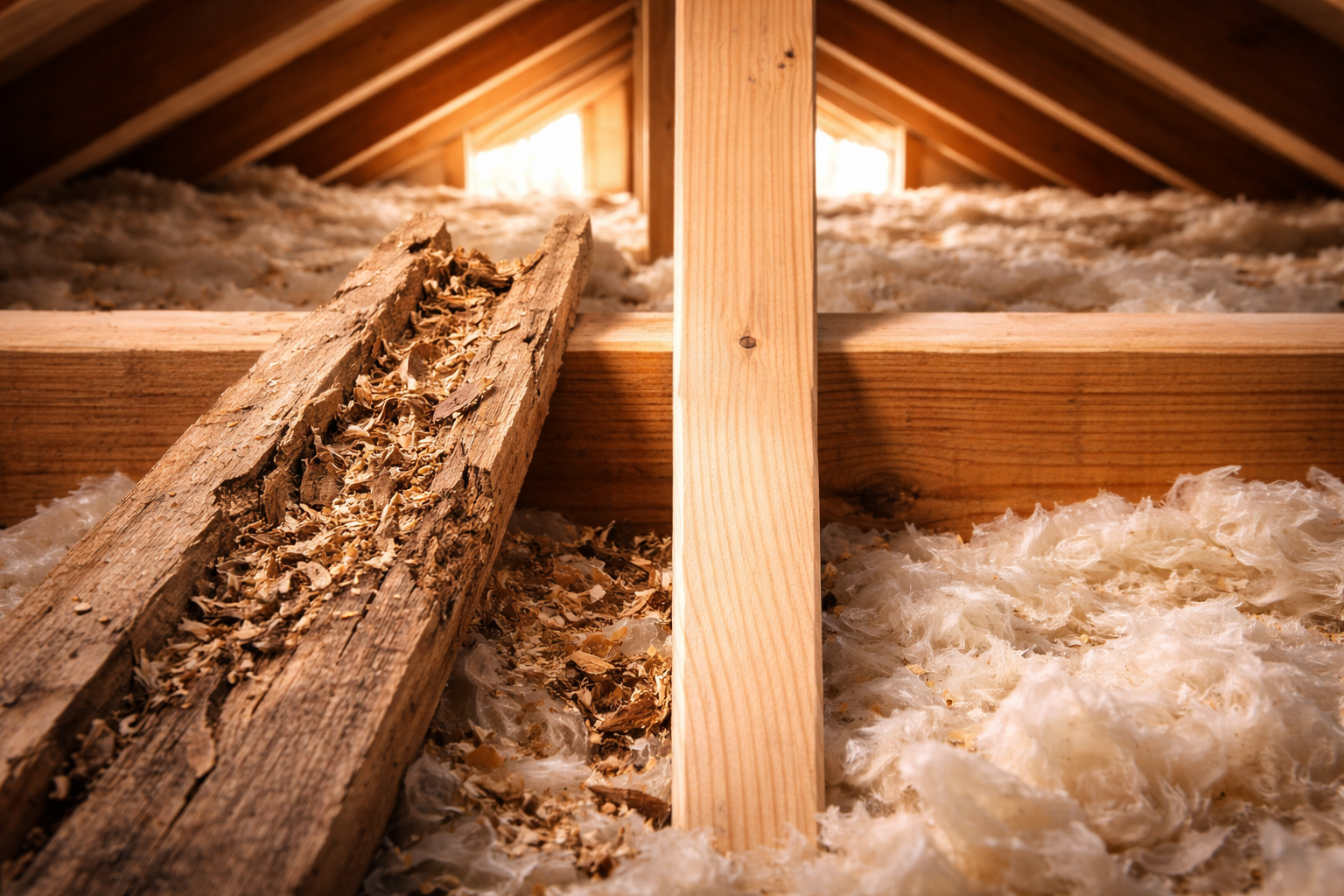
Nesting activity compacts or contaminates insulation, reducing energy efficiency.
HVAC and Plumbing Damage
Rodents often chew ductwork and soft pipes, spreading contamination through your ventilation system.
Wood and Drywall Damage
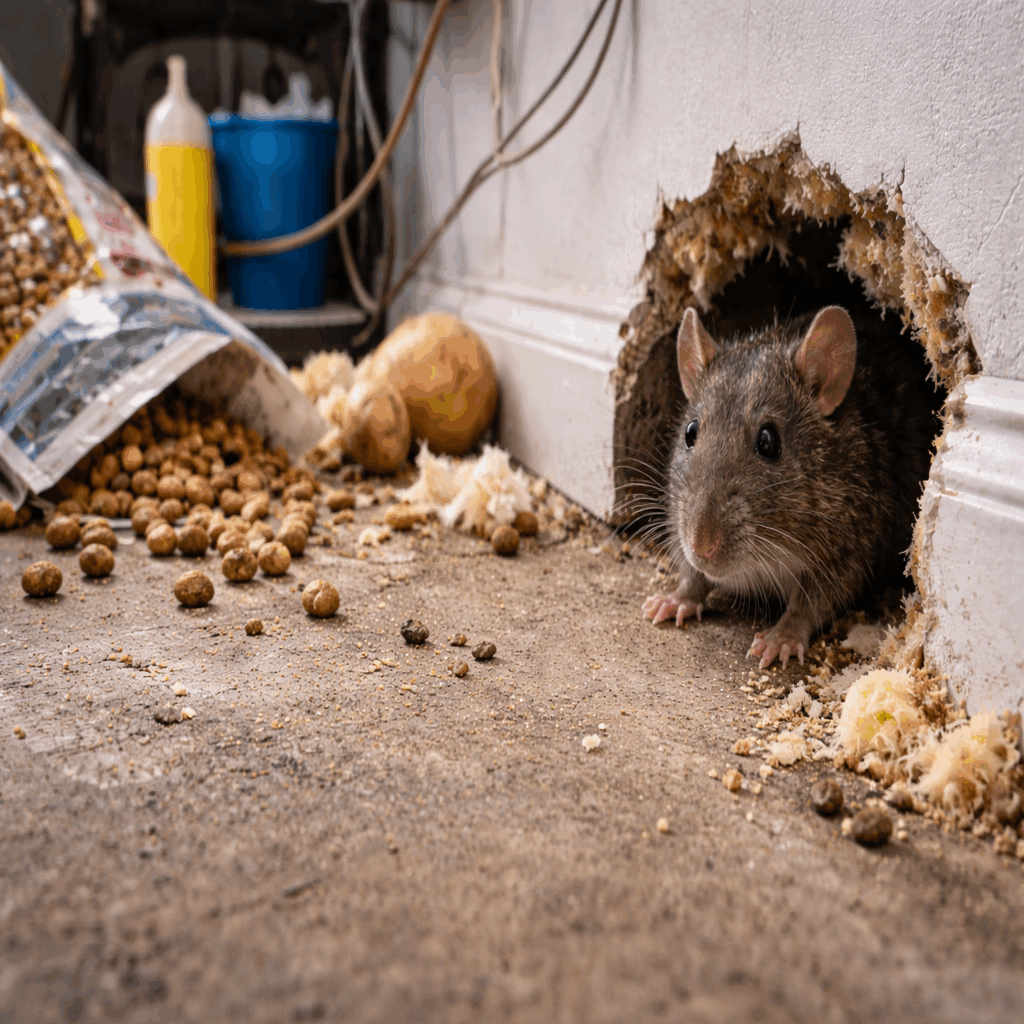
Gnaw marks, holes, and tunnels compromise the structure and make it easier for future infestations to spread.
4. Signs You Have a Rodent Problem
Early detection can save you thousands in damage.
Look for these red flags:
- Droppings in corners, drawers, or pantry shelves.
- Scratching or scurrying sounds at night.
- Chewed wires, boxes, or baseboards.
- Greasy streaks or rub marks along walls.
- A musty or ammonia-like odor.
If you notice one or more of these signs, it’s time to act fast. Rodents reproduce quickly. Mice can have up to 60 offspring per year!
5. How to Prevent Rodents from Entering Your Home
Seal Entry Points
Use steel wool or metal flashing to close gaps around pipes, vents, and door frames.
Eliminate Food Sources
Store food and pet supplies in airtight containers. Clean spills immediately.
Reduce Clutter
Cardboard boxes and paper piles make excellent nesting material.
Maintain Landscaping
Trim back trees and shrubs that touch your roof or walls. Keep compost and garbage bins sealed.
Schedule Preventive Inspections
A yearly rodent inspection from Talos Pest Control ensures early detection and long-term protection.
6. Why Professional Rodent Control Is Essential
DIY traps and poisons can offer temporary relief, but they don’t eliminate nests, access points, or health hazards.
Professional rodent control provides:
- Accurate species identification for targeted removal.
- Safe sanitation and cleanup of contaminated areas.
- Permanent exclusion to seal re-entry points.
- Eco-friendly options that protect kids and pets.
At Talos Pest Control, we don’t just get rid of rodents, we make sure they stay gone.
7. Protect Your Home and Family with Talos Pest Control
A rodent infestation can escalate from a minor inconvenience to a major hazard in weeks. Don’t wait until you see one! By then, there are likely many more hiding behind the walls.
Our comprehensive rodent control services include:
- Detailed inspections and species identification.
- Humane removal methods.
- Professional-grade sealing and exclusion.
- Decontamination and cleanup.
- Preventive maintenance for long-term protection.