
Finding termite damage in your home is unsettling, but one of the most common questions San Diego homeowners ask is:
“Is this an active termite infestation, or just old damage from the past?”
The difference matters. Old termite damage may not require immediate treatment, while active termites can cause thousands of dollars in structural damage if left untreated. This guide breaks down exactly how to tell the difference, what signs to look for, and when to call a professional termite inspector in San Diego.
Why This Question Is So Common in San Diego Homes
San Diego is a high-risk termite region, especially for:
- Subterranean termites (including Formosan termites)
- Drywood termites, which are extremely common in coastal and inland neighborhoods
Many homes in San Diego were built decades ago and may have:
- Previous termite treatments
- Old, unrepaired damage
- Disclosures from past inspections during a sale
That makes it easy for homeowners to confuse historic damage with an active infestation.
Signs of Active Termites in Your Home
If termites are currently present, you’ll usually see fresh activity, not just old scars. Watch for these warning signs:
1. Live Termites
- Pale, soft-bodied insects found in wood, soil, or mud tubes
- Often discovered during renovations or when damaged wood is opened
👉 Live termites = active infestation, no exceptions.
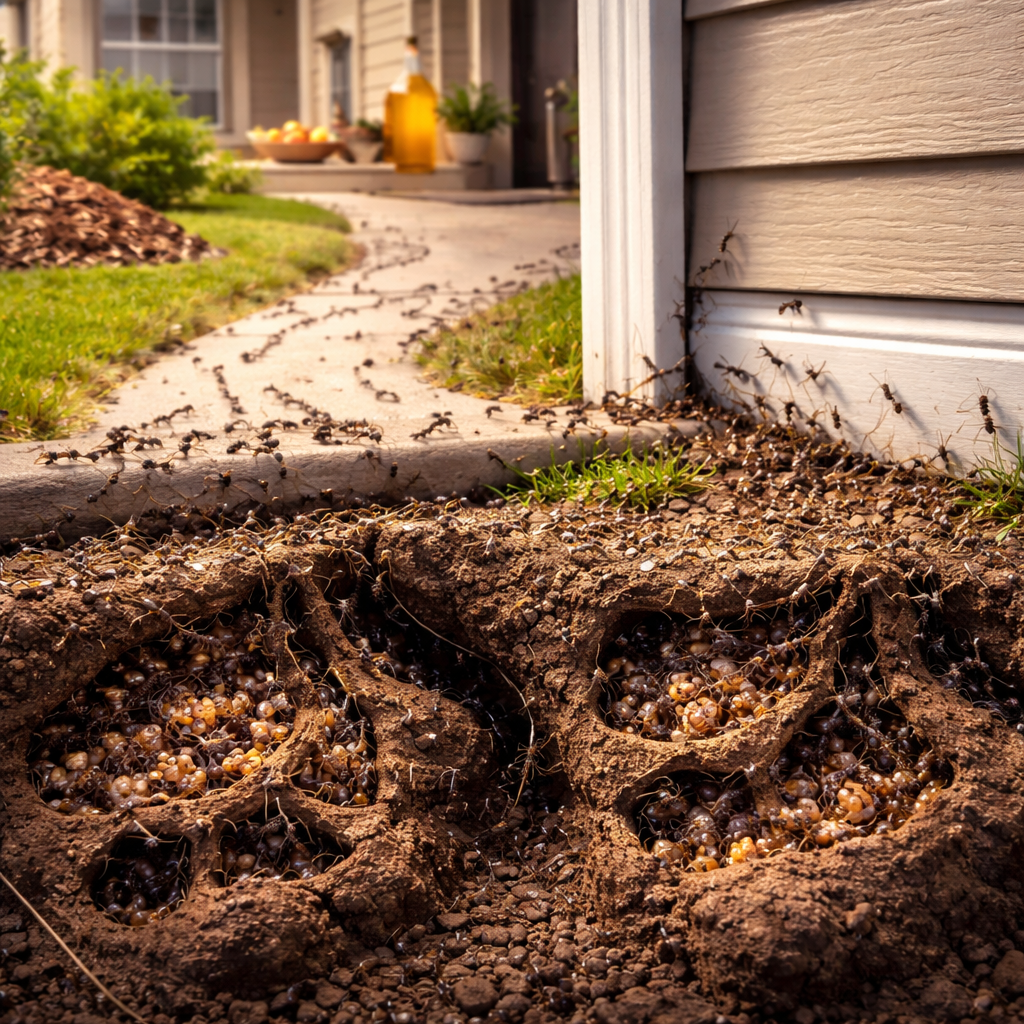
2. Mud Tubes on Walls or Foundations
Subterranean termites build pencil-width mud tubes to travel between soil and wood.
- Tubes that look moist, intact, or recently repaired are active
- Tubes that crumble and aren’t rebuilt may be old
In San Diego, these tubes are often found:
- Along slab foundations
- In garages
- Behind stucco or drywall
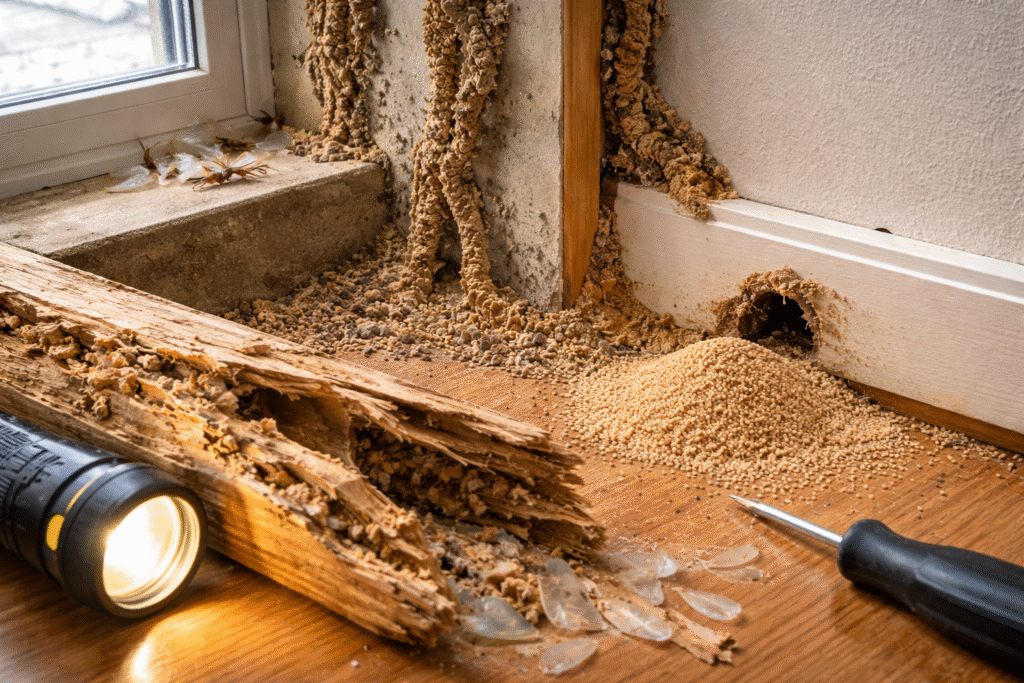
3. Fresh Termite Droppings (Frass)
Drywood termites leave behind pellet-shaped droppings.
- Fresh frass looks clean, light-colored, and dry
- You may see new piles reappear after cleaning
This is one of the clearest signs of ongoing drywood termite activity.
4. Hollow or Soft Wood That’s Getting Worse
Tap exposed wood with a screwdriver or handle:
- A hollow sound or easily punctured wood can indicate termites
- If damage seems to be spreading, activity is likely ongoing
5. Swarmers or Discarded Wings
Termite swarmers (winged reproductives) usually appear:
- In spring and early summer in San Diego
- Near windows, doors, or light sources
Seeing swarmers inside your home almost always means an active colony nearby.
Signs of Old or Inactive Termite Damage
Not all termite damage means an active problem. Here’s how old damage typically looks:
1. Dry, Brittle, or Sealed Wood
- Damage looks dark, dry, and dusty
- Wood may have been painted, sealed, or repaired years ago
- No change over time
2. No Live Termites or New Frass
- You don’t see insects
- No new droppings appear after cleaning
- No mud tubes are present or rebuilt
3. Past Treatment Documentation
If your home has records showing:
- Previous fumigation
- Spot treatments
- Clearance reports
That damage may be historic, but documentation alone doesn’t guarantee termites are gone, which is why inspections still matter.
Why DIY Inspections Often Miss Active Termites
Many termite infestations in San Diego are:
- Hidden inside walls
- Beneath flooring
- Inside attic framing
Homeowners often assume:
“I don’t see termites, so they must be gone.”
Unfortunately, termites can remain active for years without obvious surface signs.
How Professional Termite Inspections Make the Difference
A licensed termite inspector doesn’t just look at visible damage. They check for:
- Moisture patterns termites depend on
- Entry points and shelter tubes
- Active vs dormant galleries inside wood
- Environmental conditions that support reinfestation
At Talos Pest Control, inspections are designed to:
- Clearly identify active vs inactive damage
- Explain findings in plain language
- Recommend only the treatment that’s actually needed
What Happens If Active Termites Are Found?
Treatment depends on:
- Termite species (drywood vs subterranean)
- Extent of infestation
- Structure type and accessibility
Options may include:
- Localized treatments
- Non-fumigation solutions
- Whole-structure fumigation (when necessary)
The key is early detection, which can often prevent more invasive—and expensive—solutions.
When Should San Diego Homeowners Schedule an Inspection?
You should book a professional termite inspection if:
- You’re unsure whether damage is active or old
- You’ve seen frass, wings, or mud tubes
- You’re buying or selling a home
- Your home hasn’t been inspected in several years
Final Takeaway: Don’t Guess When It Comes to Termites
Old termite damage may not be an emergency—but active termites always are. Because San Diego homes are especially vulnerable, the safest move is to have a professional confirm what you’re dealing with before damage spreads further.
If you want clarity, peace of mind, and honest recommendations, a professional inspection can make all the difference.